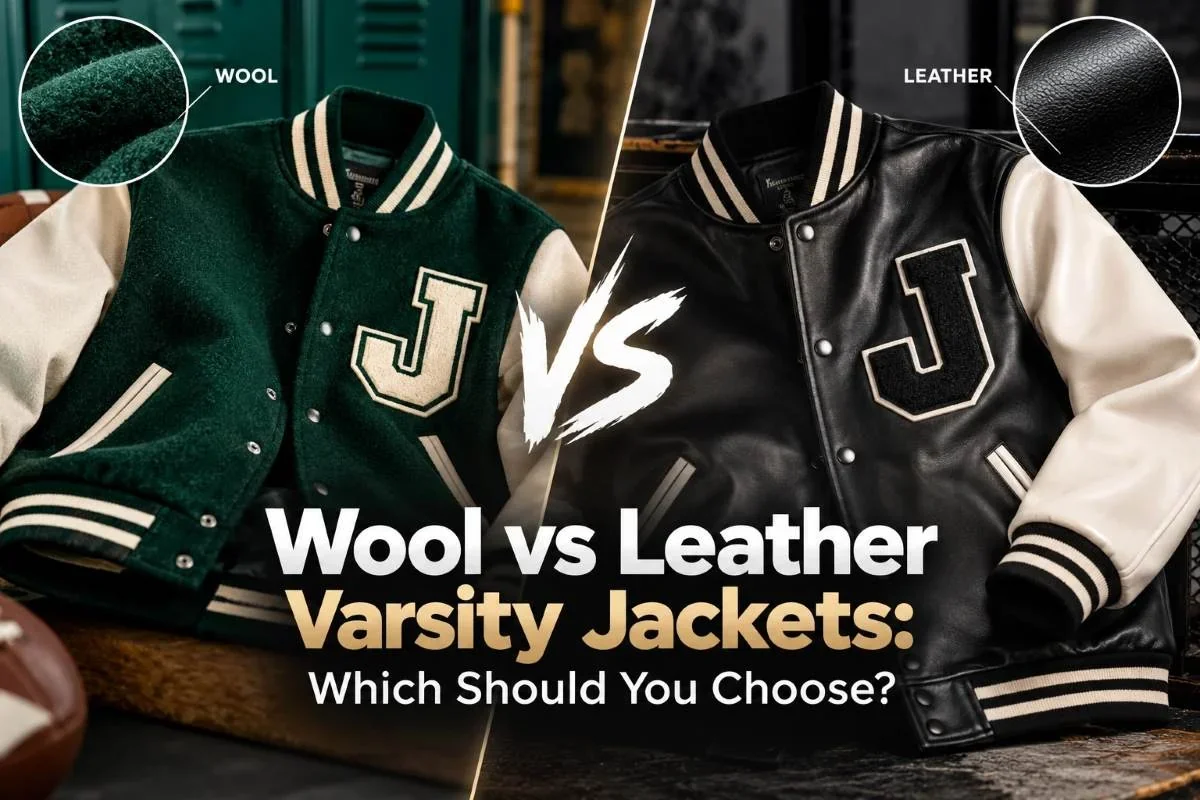
Wool vs leather varsity jacket: it is the first decision on any custom order. Both are classic. They feel different, wear differently and suit different uses. This guide compares them so you can pick with confidence.
Quick answer
- Wool: warm, soft and breathable. Great for color and patches.
- Leather: wind-proof, durable and premium looking.
- Can’t decide? Choose a wool body with cowhide leather sleeves.
What a classic varsity jacket is made of
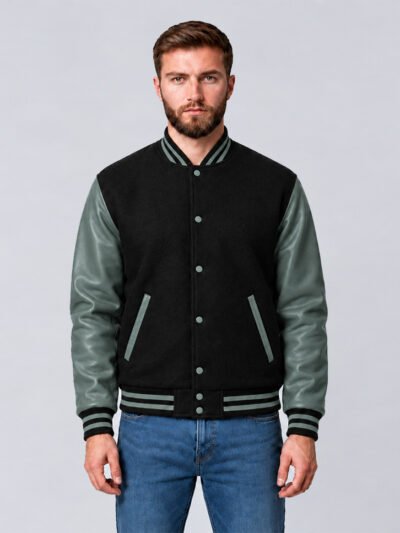
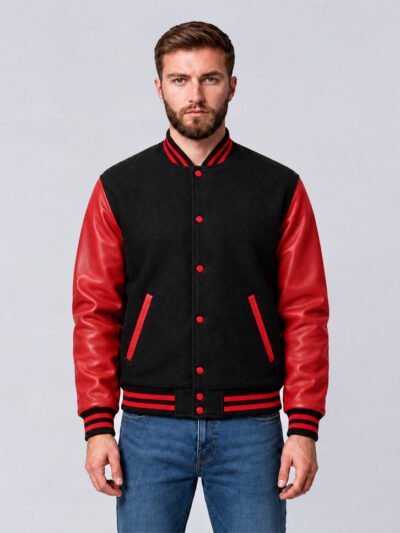
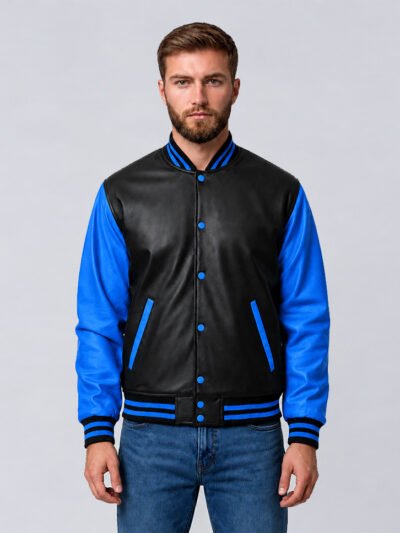
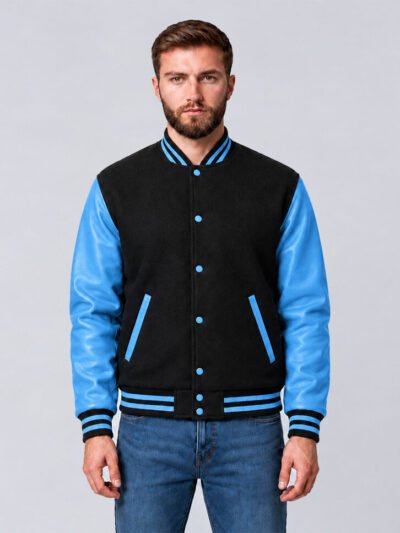
The traditional varsity or letterman jacket has a melton wool body with leather sleeves. Melton is a dense, tightly woven wool that holds its shape and resists wind. The sleeves are usually cowhide leather. This mix is why many people call it a wool and leather letterman jacket.

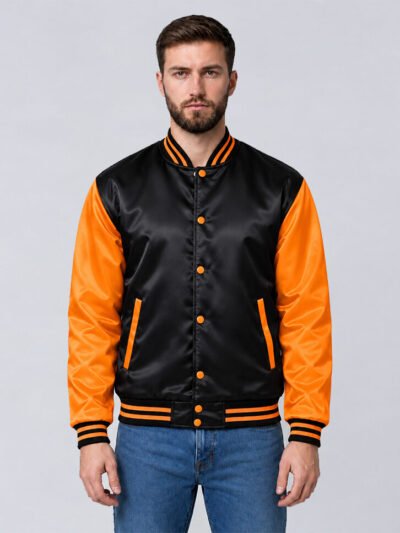
At JACWEARS you can also choose full leather, sheepskin leather, faux leather, cotton fleece, satin or soft shell. This article focuses on the two most asked about: wool and leather.
Wool vs leather varsity jacket at a glance
| Wool | Leather | |
|---|---|---|
| Warmth | Warm and breathable | Blocks wind, breathes less |
| Feel | Soft and structured | Firm (cowhide) or soft (sheepskin) |
| Look | Rich, flat color | Sharp and premium |
| Care | Spot clean, dry clean | Wipe and condition |
Wool varsity jackets
Warmth. Melton wool is warm and breathes well, so it suits cool weather without feeling heavy.
Feel and weight. Wool is soft and a little heavier than satin. It has a thick, structured feel.
Look. Wool takes color evenly, so team colors look rich and flat. It is a very good base for embroidery, chenille letters and felt patches.
Care. Spot clean marks and dry clean when needed. Brush it lightly to keep the surface neat.
Browse our wool varsity jackets.
Leather varsity jackets
Warmth. Leather blocks wind very well. It feels warm in the cold, though it breathes less than wool.
Feel and weight. Cowhide is firm and durable. Sheepskin leather is softer and lighter.
Look. Leather has a sharper, premium look and develops character over time. Patches and embroidery stand out clearly on it.
Care. Wipe clean with a soft cloth and use a leather conditioner now and then. Keep it away from direct heat.
Browse our leather varsity jackets.
Wool body with leather sleeves: the best of both
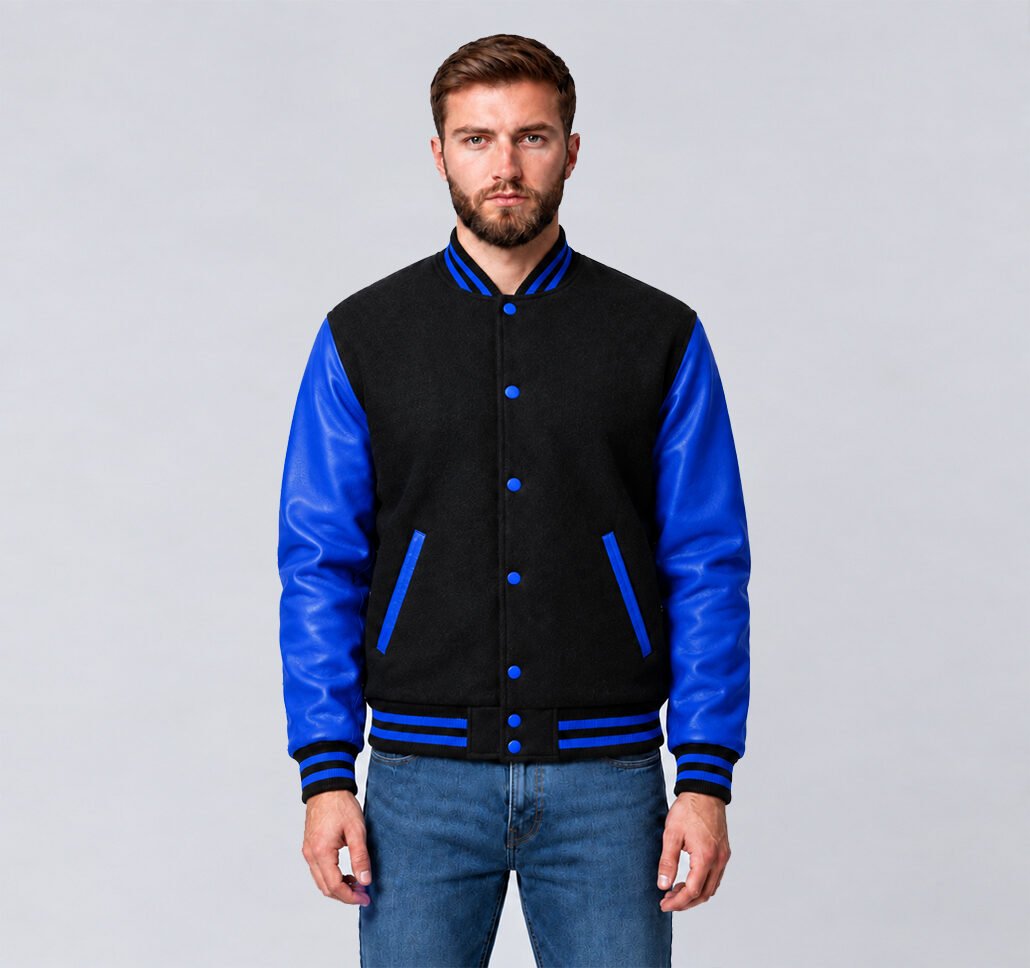
If you cannot decide, the classic wool body with cowhide sleeves gives you the warmth and softness of wool and the toughness of leather where it gets the most wear. It is also the most recognized varsity look. You can pick the body color and the sleeve color separately.
Wool or leather: which varsity jacket should you choose?
Still deciding on a wool vs leather varsity jacket? Match the material to how the jacket will be used:
- For a school or team: wool body with leather sleeves. It is the traditional letterman look.
- For a premium, long-lasting jacket: full leather.
- For a lighter, softer feel: sheepskin leather sleeves.
- For a lighter option: cotton fleece, faux leather or satin.
Durability: how each material ages
Wool holds its color and shape for years when it is brushed and stored properly. Because melton is so dense, it resists pilling better than lighter wools. The areas that wear first are usually the cuffs and elbows, which is one reason the classic build puts leather on the sleeves.
Leather is the tougher of the two. Cowhide resists scuffs and tears and softens with use, so a leather varsity jacket often looks better after a few seasons than it did on day one. Keep it conditioned so the surface does not dry out or crack.
Comfort and fit through the day
Wool breathes, so it stays comfortable indoors as well as outside. Leather traps more heat and blocks wind, which makes it feel warmer on cold, windy days but warmer than you may want in a heated room. If you will wear the jacket all day at school or work, wool or a wool body with leather sleeves is usually the most comfortable choice.
Both materials can be paired with a quilted, cotton or polyester satin lining. A quilted lining adds warmth. A satin lining makes the jacket easier to slide on over a hoodie or sweater.
Which material shows patches and embroidery best?
Wool is the traditional base for chenille letters and felt patches. The soft surface grips the patch edges, and the flat color makes the design stand out. Leather gives embroidery and patches a sharper, high-contrast look, especially on black or dark sleeves. Many teams place chenille letters on a wool body and add names or numbers on leather sleeves to get the best of both.
What affects the price?
Leather sleeves or a full leather body generally cost more than an all-wool jacket because leather is a more expensive material to source and cut. Sheepskin leather is usually priced above cowhide. Extra patches, embroidery locations and special linings also add to the cost. You can compare options and see the price update in the Design Lab.
Wool vs leather varsity jacket by use
- Cold, windy climate: leather sleeves or full leather.
- Mild climate or indoor wear: wool, or wool with leather sleeves.
- Heavy daily use: leather sleeves on a wool body.
- Lots of patches and letters: a wool body.
- Team or school orders: the classic wool and leather build, ordered through our wholesale jackets page.
Frequently asked questions
Is wool or leather warmer?
Both keep you warm. Wool is warm and breathable. Leather blocks wind better but breathes less.
Can I choose different colors for the body and sleeves?
Yes. You can pick the body color and sleeve color separately.
What sizes are available?
Sizes XS to 6XL. Check the Size Chart.
Does a leather varsity jacket crack over time?
Good leather does not crack with normal wear if you condition it now and then and keep it away from direct heat.
Can a wool varsity jacket get wet?
Melton wool can handle light rain. Let it dry naturally at room temperature and avoid putting it near a heater.
Which is better for chenille letters?
A wool body is the classic base for chenille letters, though they also look sharp on leather.
Add your own design
Whichever material you choose, add your logo, name or numbers with digital embroidery, felt, embroidered patches or chenille. See Embroideries & Patches, compare every fabric on Materials & Colors, or build yours in the Design Lab.